Showing posts with label Diabetes. Show all posts

Tuesday, July 5, 2011

Ragi Vegetable Soup | Soup with Finger Millet and Vegetables | Diabetes Diet Food

It's been a relaxed day for the last couple of days, almost since the last BM got over. It felt like I had some time to breath! Not that I complain on the BM, as it keeps me fully busy, so busy that I hardly get time to even think properly. But I guess I need some days off to even sit and enjoy a relaxed cup of coffee in the mornings, instead of hurried days. 

We have come to a understood pattern with the kid's breakfast and lunch. With her going to the high school, Konda has become such a helpful child. She helps me in most things, mostly by eating whatever I pack, which is a big help. Then she even pacifies her brothers and helps with their homework.

I know I have been saying I will come with a menu for diet and kid's lunch. Just that things seem to have a way of their own and I never get down to make. This Ragi soup was something I make for Athamma with the Ragi flour she ground it and stocked.

This is very similar to the Jowar Vegetable Soup.

Check out how we make Ragi Malt and Ragi Flour at home.


Ingredients Needed:

Finger Millet Flour / Ragi Pindi - 2 tbsp
Carrots, Cabbage, Beans, chopped - 1 cup
Salt to taste
Pepper powder - 1/2 tsp

Method to prepare:


Make the Ragi Flour at home, store it in an air tight container for further usage.
Boil 2 cups of water, when it comes to rolling stage, bring it down. In a bowl take the ragi flour and slowly add the hot water. Blend well. Put it back to heat and bring to boil.

Once it's 75% done, add the chopped vegetables and continue boiling to get the vegetables cooked.

Finally add salt and pepper for taste.

Enjoy this broth for a breakfast or dinner.

 Check out other Diabetes Food

Saturday, April 9, 2011

Whole Green Moong Dal Rice Porridge | Pasipayar Ven Pongal | Pesalu Pulagam | Diabetes Diet Food

I have heard Athamma calling Ven pongal as Pulagam and it is mostly made with whole split moong dal with rice. In fact the way I make Ven pongal is very different from the normal accepted way made in Tamil Nadu. But everybody at home are fine with the version I make. Still as a way to make something that will suit more a diabetic palette, wanted to try with husked whole green moong dal with rice.

I heard about this dish from Athamma so frequently that I thought we should make it sometimes. She used to make this and serve spice buttermilk along with it. This is not your typical food suitable for a diabetic diet. But we have made sure the fiber content is increased and rice is not much used. Ghee was completely ignored and well in the end of the day, eating this in moderation is all fine. Though some strictly say no for Rice, some do advice Rice to be included in a diabetic diet. So based on that, this dish per serving is very good.


Step by step pictures
Husked whole green moong dal roasted.

 Take rice and moong dal together
 Wash and add water
Green Chilies, Cumin Seeds, Pepper corns, Garlic, Ginger and curry leaves for seasoning
Cooked dal and rice.
Season with the tempering ingredients.

Whole Green Moong dal Rice Pongal

Ingredients Needed

Rice - 3/4 cup
Husked Whole green moong dal, dry - 3/4 cup
Salt to taste
Water - 3 & 1/2 cup

For Seasoning

Green chilies - 3 -4
Whole pepper corns - 1 tsp
Cumin Seeds - 1 tsp
Curry leaves - 4-5
Garlic - 2 -3 cloves
Ginger - 2"
Oil - 1 tsp


Method to prepare:

Dry roast the moong dal till golden brown. Keep it aside for it to cool down.

Wash and soak rice for 20 mins.

Pressure cook both rice and dal with water for 3 whistles. Mash well a ladle.

Heat a pan with oil and temper with the seasoning ingredients. Pour over the cooked pongal.

Serve hot with sambar or chutney


Notes:

The whole moong dal that I used is a dried dal and needs to be roasted well before cooking.
Since you are using only 1 tsp of oil, make sure to cook in slow flame.
Add more water if required to get a more gooey consistency


Check out my fellow marathoners doing the Blogging Marathon #4

Diabetes Diet/Management: Srivalli, Champa, Harini, PJ  
Kid Friendly Recipes: Kalyani, Shylaja, Veena  
Seven Days of Soup:Usha, Sowmya
30 Minutes Meals: Priya Suresh
Seven days of Cakes:  Anusha

Thursday, April 7, 2011

Cardiovascular Complications due to Diabetes - Part 2

Source: Written for Spice your Life, by Dr. Nagarathnam Jetti, MBBS,DPH,DIH,FIAOH.

**************************************************************************
Continued from Part 1

Most unfortunate aspect of Heart attack in a diabetic is that the heart attack does not present in a typical way. The attack can be silent. We can even say that the heart attack in a diabetic is characteristically Atypical.

In a non-diabetic, the heart attack typically presents as a compressing pain in the left  side of the chest, severe breathlessness along with apprehension, pain radiating to the left arm and to the little and ring fingers. We can see the fear in the face of the person with heart attack.

But in a diabetic patient, the heart attack may not present itself as in the above mentioned ways. The patient many not feel the pain: there may be some discomfort in the jaw, shoulder or Epigastrium. Some times could have pain in the back. He may suddenly pass motion, may have nausea. There may be breathlessness.

So a diabetic with poorly controlled blood sugar with other causating factors should be aware and cautious of the atypical presentation of the impending heart attack.

A diabetic can prevent this heart attack by knowing the contributory factors:

The continuous poor control of blood sugar along with Dyslipidemia can cause changes in the blood vessels by way of thickening, clot formation and these changes can happen in all parts of the body.
Changes in the blood vessels in the periphery can lead to loss of limbs, hypertension, and changes in the blood vessels of eyes leads to retinopathy and blindness.
Changes in the coronary vessels lead to heart attack.
Changes in the brain leads to transient Ischaemic attack and stroke.

When there is blocking, narrowing and thickening of blood vessels in the brain along with hypertension, the Transient Ischaemic attack and stroke will follow. This is a result of poor supply or non supply of blood to the important areas of the brain, prolonged non supply of blood to the brain will result in permanent damage and so the recovery from stroke is remote.
Usually when there is a block in the blood vessels and stoppage of blood supply to the particular area of brain, collateral blood vessels will be developed through which the blood supply will be restored, which is the process of recovery from the stoke.

Besides, poorly controlled blood sugar in a diabetic, there are large number of causation and contributing factors for the cardiovascular complications.

A diabetic has to be fully aware of these factors in detail so that they can take precaution to prevent these complications. We will discuss these issues in the next article.

Earlier on Diabetes:

General Notes on Diabetes
Introduction to Diabetes ~ What Is Diabetes?
Why Early Diagnosis Is Important?
Diagnosing Diabetes ~ Different Types Of Diabetes
Dietary Aspects in the Management of Diabetes
Dietary Aspects in the Management of Diabetes ~ Part 2
Glycemic Index of Different Foods
Uncontrolled diabetes leading to Renal Failure
Diabetes and Eye disease


Diabetes Diet:

Appey or Paniyaram with Jowar Four
Healthly Snack with Chickpea Salad
Gooseberry Rice
Guava ~ the Wonder Fruit

=======================================================

Diabetes Diet/Management: Srivalli, Champa, Harini, PJ  
Kid Friendly Recipes: Kalyani, Shylaja, Veena  
Seven Days of Soup:Usha, Sowmya  
30 Minutes Meals: Priya Suresh  
Seven days of Cakes:  Anusha

Wednesday, April 6, 2011

Cardiovascular Complications due to Diabetes

Source: Written for Spice your Life, by Dr. Nagarathnam Jetti, MBBS,DPH,DIH,FIAOH.

**************************************************************************
 We have talked about the complications affecting the Eyes, Kidneys if Diabetes is not controlled properly. We will now talk about the complications arising in the Cardio Vascular systems.

I will be discussing this in two parts for better understanding.

The risk of developing cardiovascular problems is very high in a Diabetic when compared to a non diabetic.

Developing a heart attack is more common among diabetics and among females the protection they normally have against heart attacks in the pre-menopausal stage is nullified if a lady is diabetic.

Vascular Changes

Fatty deposits take place in the peripheral arteries. Thickening of arterial walls will happen slowly and this will results in raise in the Blood pressure.

A diabetic will develop hypertension over a period of time due to continuous changes in the blood vessels.

If clots are formed in the peripheral arteries, especially in the legs, people may complain of leg pain and calf muscle pain. This can result in lack of blood supply to the distal parts of legs with end results of gangrene and amputation of limbs.

Changes in the Coronary blood Vessels:

Continued poor control of Blood Sugar combined with high cholesterol levels in the blood, the fat deposits can occur in the blood vessels that supply blood to the heart muscle. Thickening of the arterial walls also can take place simultaneously.

The fatty deposits or clot formation in the heart blood vessels can happen in number of places in an artery and also in all the arteries supplying blood to the heart.

The clot formation and blocking of the arterial Lumen can be much faster and greater if a diabetic has other risk factors such as high cholesterol, high LDL (Low-density lipoprotein) and VLDL cholesterol, high Triglycerides and low HDL (High-density lipoprotein).

If the diabetic is obese (central obesity) and has a family history of heart disease, he is more at risk. The risk of developing heart disease is still great if the diabetic has the other causing factors along with the above factors, like smoking, lack of exercise and stress at work. Prolonged hypertension will itself lead to heart attack.

The deadly combination of the following factors can cause heart attack in a diabetic much faster and the incidence of heart attack will be very high.

Continues high blood glucose, very high levels of HLDL, LDL and Triglycerides, Very low level of HDL, hypertension and a person with central obesity.


To be continued tomorrow.


Earlier on Diabetes:

General Notes on Diabetes
Introduction to Diabetes ~ What Is Diabetes?
Why Early Diagnosis Is Important?
Diagnosing Diabetes ~ Different Types Of Diabetes

Dietary Aspects in the Management of Diabetes
Dietary Aspects in the Management of Diabetes ~ Part 2
Glycemic Index of Different Foods
Uncontrolled diabetes leading to Renal Failure
Diabetes and Eye disease

Diabetes Diet:

Appey or Paniyaram with Jowar Four
Healthly Snack with Chickpea Salad
Gooseberry Rice
Guava ~ the Wonder Fruit


=======================================================

Diabetes Diet/Management: Srivalli, Champa, Harini, PJ
Kid Friendly Recipes: Kalyani, Shylaja, Veena  
Seven Days of Soup: Usha, Sowmya  
30 Minutes Meals: Priya Suresh
Seven days of Cakes:  Anusha

Tuesday, April 5, 2011

Jowar Vegetable Soup | Diabetes Diet Food

After the Jowar Drink for a healthy start, it had to be a soup. The diet that I was given featured lot of soups and we had to come up with different versions of soup to cover the items. A hot broth makes you feel so good anytime you drink it. Make it more filling by adding Vegetables, it becomes a complete meal by itself.

When I did that Diet program, my entire schedule revolved around soups and drinks that had to be filling as I was only consuming that the whole day. I know Jowar may not be available in all places, I really wish it was. So another post right away might be boring too. But we decided to do a week of Jowar and it happened that we ended up making it the next day. When I had it for breakfast, it was so filling that I didn't remember my lunch.


Ingredients Needed:

Jowar / Jonna - 2 tbsp
Carrots, Cabbage, Beans, chopped - 1 cup
Salt to taste
Pepper powder - 1/2 tsp

Method to prepare:

After you make the Jowar grains or rava, store them in air tight container to enjoy many more dishes like this.

Take 2 tbsp of Jowar, add two cups of water, bring to boil.

Once it's 75% done, add the chopped vegetables and continue boiling to get the vegetables cooked.

Finally add salt and pepper for taste.

Enjoy this broth for a breakfast or dinner.


Do check out my fellow bloggers who are doing the Blogging Marathon # 4 along with me.

Diabetes Diet/Management: Srivalli, Champa, Harini, PJ  
Kid Friendly Recipes: Kalyani, Shylaja, Veena
Seven Days of Soup: Usha, Sowmya  
30 Minutes Meals: Priya Suresh
Seven days of Cakes:  Anusha

Wednesday, March 9, 2011

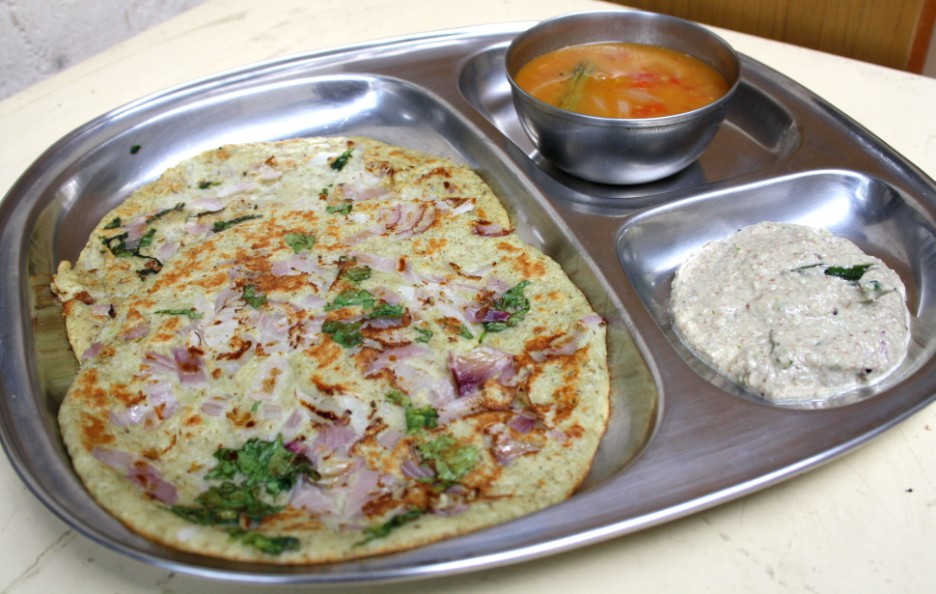
Navaratna Onion Uttappam | Multi Grain Crepe with Onions ~ 101 Dosa Varieties | Diabetes Diet Food | Step By Step Recipe

I was thinking I should make it a habit to post Diabetes Diet regularly yet I go back not doing it. Still Athamma makes sure she plans for something herself. One of the main course we think about is breakfast as I always feel that is one meal that really boasts us through the day.

We tried out this tasty dosa with Navaratna meaning 9 different grains, though some were not in grain form. Being a Diabetes diet, it ought to cater lot more with the fiber, protein and other essential minerals plus have a low glycemic index. You can check the Glycemic Index of Different Foods that normally are used in our dishes.

For another version of dosas with multi lentils, check out Kadambam Dosa

Today is the last day for the Blogging Marathon Group 2, it was fun having so many bloggers joining me in this run.


Soak all the grains for nearly 12 hours.


Grind to a smooth paste and let it rest for 30 mins before making the dosa.

Heat a tawa and spread out as you regularly do for dosa

Top the Uttappam with finely chopped onions, coriander leaves

Once it gets cooked, flip over the other side, simmer till the onions are browned.

Navaratna Onion Uttappam.

Ingredients Needed

Soaking Time : 12+ hrs
Fermentation time : 30 mins
Preparation time for each : 5 mins

Chickpea / Kabuli Channa - 50 gms
Raw Peanut / Ground nuts - 50 gms
Urad dal - 50 gms
Dried Soya beans - 50 gms
Black eyed beans - 50 gms
Black Chickpea / Black Channa - 50 gms
Whole Moong Dal / Pesulu - 50 gms
Bansi Rava - 50 gms
Rice / Rice flour- 50 gms

Green chilis - 2 long
Ginger - 2"

For topping
Onions, finely chopped - 1 medium
Cumin Seeds - 1/2 tsp
Coriander leaves - 2 tbsp

Method to prepare:

Wash and soak all grains together for over 12 hrs. Change the water if required in between. Grind to a smooth batter along with green chillies, ginger.

Allow it to rest for 30 mins.

Note: The amount of rice used is not more than what is prescribed for a diabetic. But if you want to avoid it completely, you can do so. The dosas/uttappams will turn out still soft and not very crispy. If you want to serve others at home a crispy one, add Rice flour instead of whole grains once you have the ground batter.

Heat a tawa, grease well and spread out the uttappam as you would regularly do. Top it with onions, cumin seeds and coriander leaves. Cook for couple of mins, then flip over the other side.

simmer to low and continue cooking till the onions are browned.

Serve with chutney of choice.


This is joining Supriya who is having a month long celebration of Dosa.


Group 2
30 Minutes Meals:Priya Mahadavan, Pavani,
Seven Days of Salad: lla, Divya Vikram,
For Ongoing 7 Events: Priya Suresh, Suma Gandlur, Harini,  
Kids Friendly: Vatsala, Jay, Kamalika
Seven Days of Rice: Veena Krishnakumar, Priya Vaasu, Padma Rekha,

Wednesday, June 23, 2010

Diabetes and Eye disease

Source: Written for Spice your Life, by Dr. Nagarathnam Jetti, MBBS,DPH,DIH,FIAOH.

*************************************************************

In one of my earlier articles I had mentioned that India has the dubious honour of being called as the Diabetic capital of the world. We can sign a relief that we no longer hold this distinction. In recent studies, taking the absolute figures on the incidence and prevalence of diabetes reported in China, it is clear that China will occupy the number one position.  Second in the list is Mauritius, which has about 33% incidence of diabetes.  In India it is about 15 to 20 % among urban Indians.

In my previous article I discussed about the renal damage due to prolonged hyperglycaemea (due to uncontrolled diabetes), today I will be talking about how hyperglycaema can cause damages to the eyes.

Of all the senses, the ability to appreciate the beauty around us is one that makes this life complete.  We need vision to enjoy the God’s creation, the nature and the world around us. Let us not forego that ability due to our carelessness.

Diabetic disease may include cataract, glaucoma and retinopathy, cataract-clouding of eye lens-irregular control of blood sugar can lead to early development of cataract.

Glaucoma: Increase in fluid pressure inside the eye that leads to optic nerve damage and loss of vision. A diabetic is twice at the risk in developing the glaucoma than a non diabetic.

Retinopathy:  The most common eye disease and a leading cause of blindness all over the world are caused by the changes in the blood vessels of the retina.

In long standing diabetics due to poor control of blood sugar, the blood vessels that supply blood to retina may swell and leak fluid and in some people new blood vessels grow on the surface of the retina. The walls of the new blood vessels are brittle and so may break leading to leakage.

The retina is the light sensitive tissue at the back of the eye and a healthy retina is necessary for good vision. Diabetic retinopathy usually affects both eyes. And over a period of time the retinopathy can get worsened and can lead to blindness.

In the early stages the blood vessels supplying blood to retina get blocked progressively and this is called non-proliferative retinopathy. Where there is a near complete block, the retina sends signals for nourishment which triggers the growth of new blood vessels. These newly grown blood vessels have thin fragile walls, may grow on the retina and Vitreous gel may break and leak blood resulting in severe vision loss and blindness.

What a diabetic has to do.

The diabetics either type 1 or type 2 must have a comprehensive dilated eye examination atleast once a year.

The pregnant women with diabetes must also have eye check up during pregnancy

Often there are no symptoms in the early stages of the disease, nor is there pain.  Do not wait for the eye symptoms; be sure to have a comprehensive dilated eye examination.

Blurred vision: When the macula, the central part of the retina that provides sharp central vision, is damaged when new blood vessel grows on the surface of the retina they can bleed into the eye and block the vision.

People with proliferative retinopathy can reduce the risk of blindness by 95% with timely treatment and appropriate follow up.
Some useful tips about symptoms:

If a diabetic sees few specks of blood or spots “floating’ in the vision.

If floating spots occur one has to see the eye doctor immediately.

The eye doctor may do the visual acuity test, dilated eye examination and tonometry. He will check up for the early signs of the disease like leaking blood vessel, retinal oedema (macular oedema) pale fatty deposits on the retina-signs of leak of blood, damaged nerve tissue and any changes to the blood vessels.

If required, the eye doctor may do fluorescein angiogram.

If early stages of retinopathy is detected that is the time for the patient to act to achieve good control of blood sugar, good control of blood pressure and cholesterol.

For macular oedema and proliferative retinopathy the laser treatment is available which will prevent vision loss.

Even if a diabetic achieves good control of blood sugar, blood pressure and cholesterol, it is advisable to have yearly eye check up in order to prevent the vision loss.

Next time we will talk about cardiovascular complications arising due to improper control of diabetes.


===================================================================
Earlier on Diabetes:

General Notes on Diabetes
Introduction to Diabetes ~ What Is Diabetes?
Why Early Diagnosis Is Important?
Diagnosing Diabetes ~ Different Types Of Diabetes
Dietary aspects in the management of diabetes

Diabetes Diet:

Appey or Paniyaram with Jowar Four
Healthly Snack with Chickpea Salad
Gooseberry Rice
Guava ~ the Wonder Fruit
=================================================================

Friday, May 28, 2010

Uncontrolled diabetes leading to Renal Failure

Source: Written for Spice your Life, by Dr. Nagarathnam Jetti, MBBS,DPH,DIH,FIAOH.

*************************************************************

Diabetes has truly become a pandemic disease and with modern lifestyles being liberally adapted and practiced by all populations of the world, the incidence and prevalence of diabetes is sure to increase.

In this context, it is apt that one, whether he/she is a diabetic or not, has to know more about diabetes and its complications.

The Diabetes, if not controlled properly will lead to complications affecting all systems of the body progressively. Once damage occurs in a system it will be difficult to reverse the damage.

Notably kidneys, eyes, nerves, cardiovascular systems are affected. Since all the systems in the body function in a well coordinated manner, the bad effect in one system will affect other systems also.

Lets take one system at a time and understand better on how this actually affects and what can be done.

Renal system

We have two kidneys which act as controllers for the correct balancing of the water and electrolytes in the body. It is also an excreting organ for the waste products, chemicals and other unwanted materials from the body.

The waste products are removed from our body through various sources like skin, breath, urine and faeces. When there is a restricted intake of water, Kidneys manage the short supply of water and electrolytes to the body by reducing the formation of urine.

Coming to blood glucose, we can monitor by checking the threshold levels. As long as blood sugar is within 180 mg/dl the kidneys will retain the glucose but when the blood sugar crosses 180 mg/dl, the kidneys will allow the glucose to pass in the urine. Hence the threshold level of blood glucose is 180 mg.

Beyond 180 mg/dl, the glucose appears in the blood and we call the phenomenon as “Glucosurea”.
 
The glucose may appear in urine, even when the blood glucose is less than 180 mg/dl. The situation can be expected in ‘Renal dysfunction’.

How to know that a diabetic is developing Renal Failure / dysfunction?

Two main reasons that can attribute to a quicker damage to kidneys can be persistent hyperglycemia and high blood pressure. Renal failure is never sudden in this process, but may take long time for the kidneys to fail completely.

Two important tests are done to the Renal functions status.

1.    Micro Albuminurea - Total amount of urine excreted in the collected for the 24 hour period and then tested for Albumin levels.

2.    Creatinine level in the blood

What one has to do to stay healthy with Diabetes?

a.    Follow a healthy diet plan
b.    At least 30 minutes active, suitable exercise
c.    Proper medicines to control diabetes
d.    Check the blood glucose at frequent interval and record
e.    Control blood pressure and cholesterol
f.    Check your feet for cuts, blisters, swelling, redness, sores and sore toe nails.
g.    Brushing of teeth twice a day
h.    Avoid smoking
i.    Extreme moderation  / avoid alcohol

Specifically to prevent kidney problems

•    Good control of blood glucose
•    Good control of blood pressure
•    Use of ACE inhibitor or ARB drugs as prescribed by the doctor
•    To keep under check the Microalbuminurea  and serum creatinine levels (testing atleast once in 6 months)
•    Avoid taking pain killers like paracetamol regularly

Consult your doctor if you have these symptoms.

a.    pain or burning when you urinate
b.    frequent urge to go to bath room
c.    urine that looks cloudy or reddish
d.    fever or a shaky feeling
e.    pain in the back or on the sides below the ribs

‘X’ ray with contrast has to be avoided.

Albumin in urine

-    Less than 30 mg is normal
-    30 to 300 mg indicates early kidney disease

More than 300 mg indicates more advanced kidney disease

Serum Creatinine levels

Normal – 0.8 to 1.4 mg/dl.
Slightly low values for women

Now, we have seen that by allowing the blood sugar to be at high levels(hyper glycemea for a long period there  will be Renal damage ultimately and Renal failure.

Once the Kidney failure takes place, we have to resort to peritoneal dialysis or Haemodialysis to set right the various deranged parameters of   blood to lead a normal life.The dialysis also can  not  be prolonged for a long time and a stage will come where Renal transplantation has to be thought of.

We have to avoid this stage by strictly following the prescription of Drugs,Diet and Exercise  and regular periodic  checkup of B.P,Lipid profile,HbA1c and urine for Albumin.

Next time we will talk about the damage to the eyes, like, cataract, retinopathy etc.


Friday, August 28, 2009

Glycemic Index of different foods ~ Diabetes!

Source: Written for Spice your Life, by Dr. Nagarathnam Jetti, MBBS,DPH,DIH,FIAOH.

*************************************************************
In the previous articles on Diabetes, we discussed on what Glycemic Index is and the different types of Glycemic Index. We also discussed the points one has to note on consuming food. Today I am going to list out the Glycemic Index of some of the common food that we consume.

How quickly do foods raise your blood sugar?

The glycemic index measures how fast a food is likely to raise your blood sugar. This is very useful to note as its helpful to know which will help you maintain your blood sugar at what time. For example, when you are exercising and your blood sugar is already low, you should be eating food that will help raise your blood sugar quickly. On the other hand, there is not much activity and you want to maintain the blood sugar. So at this point of time, you got to eat something that has a lower glycemic index.

So basically higher Carbs which has higher GI help in raising low blood sugars, while slower carbs which have lower GI are helpful in preventing drops in blood sugars.

The below given figures are referred across different sources. These numbers are to be taken only as guidelines and not as the exact numbers as the effect the food has on blood sugars depends on lot other factors such as cooking time, fiber and fat content etc including many more.

This is meant to help and guide only as one of the tools for a better balance!

Glycemic Index of common food


These values are taken from different reliable sources from Internet.


Earlier on Diabetes:

General Notes on Diabetes
Introduction to Diabetes ~ What Is Diabetes?
Why Early Diagnosis Is Important?
Diagnosing Diabetes ~ Different Types Of Diabetes
Dietary aspects in the management of diabetes
Dietary aspects in the management of diabetes ~ Glycemic Index!

Diabetes Diet:

Appey or Paniyaram with Jowar Four
Healthly Snack with Chickpea Salad
Gooseberry Rice
Guava ~ the Wonder Fruit
Jamun Seed Powder ~ Diet for Diabetics!
Stuffed Paratha with Greens

Thursday, August 13, 2009

Stuffed Paratha with Greens ~ Diabetic Diet!

When you are ardent to follow some diet be it for diabetes or even on a diet regime, dry roasted rotis play a major role. Any day wheat based dishes are better than rice. And it really helps if you can plan on lot of varieties in order not to feel bored eating the same stuff. The thought that we will have to plan so much as to what to make, takes us so much time that I always feel having a planned menu on hand helps.

During my recent meeting with a dietician to discuss a well balanced diet for diabetes, she showed the menu they came about for people who had enrolled for a weight loss program! The menu was absolutely delicious. I was telling the dietician that given that kind of a menu, I am sure you will get lots of interested folks to order. And I also felt it must be heavy, given that multiple courses involved. She assured that it wasn't the case. It was more of a satisfying all senses with balanced diet. Surprising I also had a similar menu on mind, only it wasn't so elaborate as her's. But I am now motivated to prepare something on those lines.

Will surely share once its ready. But for today, I have a simple paratha made by stuffing greens in to it. This also works out more in lines of cleaning out the pantry too. We had these greens laying around for couple of days, finally not knowing what else to make, I decided the parathas would be best way to make clean and neat dish!

Photobucket


Since both greens of any type, with wheat is such a good diabetic food, thought to make the best of it by using very little oil and cooking in low flame, so that the nutrients are not lost.

As the gravy or curry is sauteed, it makes a very tasty paratha on its own. You need not really bother about making a side dish again. It really helps in those harried times, having to make so many varieties. After all we should ignore a diabetic need. Especially they end up saying they want to make things easy for us by eating regular food. Not at all, with little planning, we can make healthy food for diabetics no time.

There is no fixed recipe for my stuffing here, you can add/remove spices based on your wish.

Make roti dough as usual but a wee bit stiffer for stuffing to stay in place.


Photobucket


For the stuffing for two parathas

Greens of your choice, I used a bit of mint, couple of spinach, handful of Ponnanganni keerai,
A small Onions
1 medium Green chilie (if you prefer spicy)
Red chilies as per taste
Coriander a little
Cumin powder a little
Salt to taste
Oil - 2 tsps

Method to prepare:

Wash and pick the greens. Let it drain well.

Have the dough ready and let it rest for 10 mins.

Heat a pan with 1 tsp oil, add the chopped onions, saute well.

Then add the greens and the spices. simmer to low flame and cover with lid for 6 - 8 mins.

When the greens are cooked, remove to a plate and allow it to cool.

Then make equal balls of the roti dough, take one ball, make a dent in middle, stuff a spoon of the greens. Close well.

Roll out after dusting it with flour and cook on a hot tawa. If you are eating it right away, need not use oil to cook the roti.

This paratha packs good protein and energy as it includes greens and less oil.


Diabetes Diet:

Appey or Paniyaram with Jowar Four
Healthly Snack with Chickpea Salad
Gooseberry Rice
Guava ~ the Wonder Fruit

Tuesday, July 28, 2009

Jamun Seed Powder ~ Diet for Diabetics!

I am sure as a kid you would remember eating this delicious fruit! For me, the memories were mostly on the lines of climbing the branches of a very huge tree in our friends house. And watching my friends climb up the tree while I wait eagerly down for my share of plum, juicy Nava Pazham. I wasn't big on climbing trees, so allowed myself just the share of playing the guard and share the bounty with them.

Somehow our memories of our wonderful childhood never leaves us right. Though after so many years, I could very well lay hands on even plumper and juicer Jamuns, those from memory refuses to pass. And every time I pop in one to enjoy those memories of a 7 yrs old comes back haunting! And to imagine those lovely ones are not only tasty but are so healthy makes it all the more dear.

As part of the diet for diabetics, Jamuns are one of the fruits that a diabetic can eat without hesitation. Not only are the fruit so healthy, the Jamun seed powder is very good for diabetes.

Photobucket

"Jambul (Syzygium cumini) is an evergreen tropical tree in the flowering plant family Myrtaceae native to Bangladesh, India, Pakistan and Indonesia. It is also known as Jamun, Nerale Hannu, Njaval, Jamblang, Jambolan, Black Plum, Damson Plum, Duhat Plum, Jambolan Plum, Java Plum or Portuguese Plum. "Malabar plum" may also refer to other species of Syzygium.

Jamun trees start flowering from March to April. The flowers of Jamun are fragrant and small, about 5 mm in diameter. The fruits develop by May or June and resemble large berries. The fruit is oblong, ovoid, starts green and turns pink to shining crimson black as it matures. A variant of the tree produces white coloured fruit. The fruit has a combination of sweet, mildly sour and astringent flavour and tends to colour the tongue purple. The seed is also used in various alternative healing systems like Ayurveda (to control diabetes, for example), Unani and Chinese medicine for digestive ailments. The leaves and bark are used for controlling blood pressure and gingivitis. Wine and vinegar are also made from the fruit. It has a high source in vitamin A and vitamin C." - Source Wiki

Photobucket


Diabetics are advised to consume 1 tsp of this jamun seed powder in empty stomach early morning. Lets see how we can prepare this powder.

There are two ways of making this powder, one with drying in sun and the other without by dry roast the seeds.

Sun Dried Jamun Seeds Powder

Once you eat the fleshy part of the fruit, wash the seeds and dry in sun for a week. By then you will have really dry seed, whose outer skin will peel off and inside berry would be more like a pistachio.

You can pound the seeds along with the outer skin and make into a fine powder. Since this is sun dried, it becomes really hard and your mixer blades might go for a toss if you try to make a powder of it! So take caution to pound it into smaller pieces before running in the food processor or mixer.

Photobucket

Once you have a fine powder, store it in a container and eat 1 tsp first thing in the morning on empty stomach.

Powder from wet seeds

The powder can also be made immediately after you wash off the flesh.

Heat a pan, and dry roast the seeds till they turn crispy. Pound them into fine powder and store for consumption.

The only difference I found in this method is, at times it becomes difficult to get it roasted well and dry.

Choice is your, but consume a teaspoon of Jamun powder for a better management of Diabetes!

Monday, July 20, 2009

Dietary aspects in the management of diabetes ~ Glycemic Index!

Source: Written for Spice your Life, by Dr. Nagarathnam Jetti, MBBS,DPH,DIH,FIAOH.


In the previous article, we discussed about few myths and realities related to the diet a Diabetic should follow or not follow.

We also discussed about how to calculate the calories required for daily consumption. Which leads us to discuss the different proportions Carbohydrates, Proteins, and fats are required on per day requirements.

When we discuss food requirement, we will have to base it on Glycemic Index.

What is Glycemic Index?

Glycemic Index lets you know how fast a particular food is likely to raise your blood sugar. When your blood sugar levels have gone down, you can get it to normal by eating those foods that tend to increase the blood sugar levels. Likewise when you know that during a particular period, there is not much physical activity scheduled, one can consume foods that have lower glycemic index.

Low Glycemic Index:

Glycemic Index 50 and below, should be selected for meeting the daily requirement

Medium Glycemic Index

Foods with Glycemic Index between 50 and 70 maybe taken in a restricted way but the quantity must be monitored. If diabetic likes a particular food falling within this category he should practice caution in consuming it on small quantity. For example, if one is fond of sweets, there is no harm in tasting a small piece. Satisfying the tongue is more important than working up your cravings for it.

High Glycemic Index

Foods with glycemic index between 70 and above are generally to be avoided because the blood glucose will rise very sharp and fast.

So once you know the Glycemic Index of each food that you consume on daily basis, you can plan and co-ordinate foods accordingly!

Tips regarding for buying and consuming common food items:

While buying tinned and packed foods, one has to always see the date of packing and date of expiry.

Watch out for those bulged tins, which indicate spoiled food.

Looking at the label where it is mandatory to give the composition, total calories, and addition of colours, flavoring agents, addition of sugar and indication of vegetarian or Non vegetarian.

It’s always better to avoid soft drinks as they contain unknown chemicals. In addition they also contain colouring agents, flavouring agents, stabilizers, homogenizers and preservatives. Most of these chemicals are derived from dyes which have to pass through the kidneys and maybe harmful to the kidneys. Most of the soft drinks contain saccharin which is considered to carcinogenic.

Alcohol: It’s always better to avoid alcoholic drinks. But if one likes to have, it should be restricted to not more than 60 – 90 ml per day. Alcohol gives 4 kcals per gram and they are empty calories. And should always be consumed within the allowed calories.

All said and done, the diabetics should always remember that when a diet and drugs are prescribed, eating more food and taking extra oral dose or insulin does not work because at least in India we have too many festivals which varieties of food prepared.

So exercising caution and control on intake with enough physical exercise is the best way to lead a healthy diabetic way!

As the saying goes a diabetic may not follow the “Lankanam Praramoushadham” (Fasting is the best medicine) dictum but should definitely not over eat!

Next article will discuss the Glycemic Index of each food or ingredients.

Looking forward to know your feedback!

===================================================================
Earlier on Diabetes:

General Notes on Diabetes
Introduction to Diabetes ~ What Is Diabetes?
Why Early Diagnosis Is Important?
Diagnosing Diabetes ~ Different Types Of Diabetes
Dietary aspects in the management of diabetes

Diabetes Diet:

Appey or Paniyaram with Jowar Four
Healthly Snack with Chickpea Salad
Gooseberry Rice
Guava ~ the Wonder Fruit
=================================================================

Thursday, July 2, 2009

Dietary aspects in the management of diabetes

My sincere apologies to my readers who were waiting for the next edition on the Diabetes. My father was most interested to know how the articles are received. Let me continue with the rest without much ado!

Source: Written for Spice your Life, by Dr. Nagarathnam Jetti, MBBS,DPH,DIH,FIAOH.

************************************************************************************
Before we go deep into the details of diet and how a diabetic should go about knowing and adapting the food, lets take a look at some of our famous sayings

In pre-diabetic stage and for those who are potential diabetic, diet plays an important role in postponing the occurrence of diabetes to a great extant.

The 'Diet’ as we refer is extremely complicated, it is as complicated as man himself.

Its an elaborate study on its own, so to understand and to benefit out of the knowledge gained, one needs involvement and commitment.

All of us have to eat to live but we come across some people who live to eat. Diabetics have to eat healthy food to live healthy.

There is a saying in Sanskrit “Lankanam Praramoushadham” (Fasting is the best medicine) this may be true for normal people, but this cannot be practiced by diabetics.

Another saying goes as “Koti Vidyalu Kooti Korake, which in English can be translated as "All the millions skills a man has, is all only a means to sustenance. And even if a diabetic has millions of skills, should always be cautious about the diet.

Eka Bhojan Maha Yogi, Dwi bhojan Maha Bhogi, Thri Bhojan Maha Drohi, Chatur Bhojan Maha paapi which means "A Man who takes food only once a day is a blessed man, taking a meal twice a day, is one who enjoys his food, thrice a day a fraud, and four times a day, is a sinner.

But in case of a diabetic, he/she has to divide the total consumption allowed per day, into 5 to 6 small portions through out the day.

The diabetic has to consult a dietitian and arrive at the balance diet suitable for him/her. While arriving at the balance diet, one has to consider the total calories permitted per day, which is arrived at, based on the height, weight and the occupation of the diabetic (expenditure of the calorie involved)

A person with normal work of height 5.5” and medium frame may generally require 1800 KCal per day.

These calories have to be obtained from the total food taken per day, consisting of carbohydrates 60 – 65%, proteins 20 – 25% and fats not more than 15%.

The food chosen should also have sufficient quantities of vitamins, minerals and fiber. Once the types of food and the quantity are chosen, this may be divided into five to six portions, to be consumed through the day.

While calculating the calories, one should keep in mind that carbohydrates and proteins give 4 kcal per gram and fats give 9 kcal per gram. While selecting the carbohydrates (which are generally met from cereals, pulses and roots), one has to select complex carbohydrates, so that they undergo full process of digestion and release the simple sugar (glucose) in a slow manner. And the most important note is to avoid foods containing ready made sugars.

Proteins are generally obtained from pulses, nuts, meat, fish and eggs. It’s always better to take lean meat and more of fish and in the egg its better to avoid the yellow.

For fats we can consume nuts, vegetable oils and the proportion has to be a good mixture of only unsaturated fatty acids (PUFA) and Mono unsaturated fatty acids and some saturated fats.

Dieting always puts off people, so its very important to select and make the food interesting but also meets the requirement.

So this can be best achieved by adding seasonal foods, fruits and vegetables in their diet. And other factors like regional and racial cultures and habits, family culture, social habits, personal tastes and personal restrictions like nature of job, always take precedence.


While selecting the foods, one has to keep in mind, the glycemic Index, load of carbohydrates and load of calories.

In the forthcoming articles, I will be discussing more on the Glycemic Index and give more elaborate diet plan.

*************************************************************************************
Earlier on Diabetes:

General Notes on Diabetes
Introduction to Diabetes ~ What Is Diabetes?
Why Early Diagnosis Is Important?
Diagnosing Diabetes ~ Different Types Of Diabetes

Diabetes Diet:

Appey or Paniyaram with Jowar Four
Healthly Snack with Chickpea Salad
Gooseberry Rice
Guava ~ the Wonder Fruit

Monday, June 1, 2009

Appey or Paniyaram with Jowar Flour ~ a quick and simple breakfast for Diabetics!

Its really amazing how you can stretch your mind to think of interesting, yet healthy dishes for all your meals. When I decided to take up the challenge of cooking up dishes for Diabetics, I knew one has to be very resourceful and imaginative. Afterall you can't use most ingredients that you normally take for granted. I am still in discussion with Dad on the next article on diabetes. Though I have the notes ready, I wanted to discuss it with him again before publishing it. The next article was more on managing diabetes and dietary aspects of the condition.

Coming to the dish, appeys or Kuli Panniyams are most done with Rice batter. Mostly its done with the left over batter, but I have known my Amma making it always with a fresh one. The seasoning adds all the essential kicks you might want for a breakfast. Dipping it in a coconut chutney or groundnut chutney is enough to take you to heights! You can check out my Guntha Ponganalu if you want to know the regular way.

Photobucket

But having decided Athamma doesn't want a breakfast with rice, Jower flour seem the next best option. And yes making them as either Rotis or Dosas are so routine too. The appey pan was calling us and we couldn't ignore it right!

Since coconut chutney or groundnut chutney was no no for a Diabetic, I made these quick fatafat Tomato Chutney and Mango Relish. Athamma was crowing ahha hhah..after even the first bite!

Makes : 16 appeys.
Ingredients Needed:

Jower flour - 1 cup
Salt to taste
Onions - 1 medium
Green chilies - 1 long
Bengal gram - 1 tsp
Curry leaves few
Oil - 2 tsp

Photobucket


Method to prepare:

Heat a pan with little oil, gently sauté the chopped onions, including all the other ingredients expect the jower flour.

Take the flour in a bowl, mix salt and slowly add water and mix well to get a dropping consistency. Add the other ingredients that are sautéed. Mix well. Allow it to rest for 10 -15 minutes. This way it becomes little more soft when its getting cooked.

Heat the appey pan and put it medium flame. Take a spoonful of the batter and drop into each hole, sprinkle little oil over the top. Cover with lid and cook for 2 -3 mints.

Photobucket

Once its done, turn it to the other side and cook till its done. It takes about 5 - 6 minutes for the entire batch to be done.

Serve this with your choice of relish, I did with Tomato Chutney, a quick one at that. Will be posting it shortly!

Tuesday, April 28, 2009

Diagnosing Diabetes!

Diabetes is diagnosed either by suspicion by the patient or the Doctor, when the following signs and symptoms are noticed.

Clinically it is suspected when there are some signs and symptoms noticed either by the patient or by the Doctor. As mentioned in the earlier articles, it can be a typical symptoms like Poly urea (frequent urination), Poly phasia (frequent hunger) or Poly dypsia (Excessive thirst). Or other symptoms or signs like Weight loss or gain, Fungal infections especially in the genitalia, teeth infections, non healing wounds etc.

It is also diagnosed accidentally or incidentally when a person undergoes pre employment health check, periodically check like annual check, check up before undergoing any operation or even during taking a policy.

During any health check, if the HbA1c (Glycosylated haemoglobin) is found to be more than 7 %, it indicates the person to be diabetic.

Confirmation of diabetes is always by Blood Test. The test is called Glucose Tolerance Test (GTT) . The test can be explained as follows

The person is asked to have a normal meal in the previous night, and asked to attend the hospital in the morning (on empty stomach) . Whereupon the Fasting Blood sample and Urine sample is taken.

The patient is given 75 gms of glucose. Every half an hour, blood and Urine samples are drawn and examined.

If the 1 & 1/2 hr blood sample is more than 180 mgs/dl (deci liter), the patient is pronounced to be a diabetic. The threshold level of blood sugar in normal kidneys is 180 mgs/dl and when the blood sugar is more than 180 mgs/dl, the glucose passes through the kidney and appears in the urine.

The normal blood glucose in fasting should be between 70 - 110 mgs/dl.
Post prandial (after food) blood glucose should be below 140 mgs/dl

When Post prandial is between 140 - 180 mgs/dl, the stage is considered to be glucose intolerance or Pre diabetes stage.

When Post prandial is more than 180 mgs/dl, it is considered to be Frank diabetes or overt diabetes.

These Pre diabetes group of people have great potential to become diabetic and have great scope for post phoning the occurrence by taking advise from doctors and also following the diet discipline, exercise etc

We shall cover the areas in the coming weeks

*************************************
Source: Written for Spice your Life, by Dr. Nagarathnam Jetti, MBBS,DPH,DIH,FIAOH.

Friday, April 17, 2009

Healthy Snack for Diabetics ~ Chickpea Salad or Sundal!

I know I had promised to come up with menu and diet details for Diabetes. So first in the series is going to be a simple one that's quite common in atleast the South Indian homes. I remember my Amma making this so often when her father was with us for a while. The evenings used to be some salad or the other for sure. Then Dad insisted she makes some evening snack and some legume used to find its way to evening snack.

When we talk about a Diabetic diet, there are many factors that we got to consider. First being, they should eat small measures about 4 -5 times a day, ensuring they keep their sugar levels on control. This means they cannot stuff themselves with heavy meal in one serving. So they will have to split accordingly and at the same time ensure they don't stay hungry.

This simple and quick Indian salad ensures we address the protein requirement and also mental satisfaction.


Ingredients Needed:

Chickpea - 1 cup
Onions - 1 big
Coriander leaves handful
Curry leaves handful
Green chillies - 2 long

For Seasoning

Oil - 1/2 tsp
Mustard Seeds - 1/2 tsp
Urad dal - 1/2 tsp
Salt to taste

Method to prepare:

Wash and Soak Chickpea for atleast 6 hrs or over night. Wash and pressure cook till tender.

Then take a kadai and add oil. Once its hot, add mustard Urad dal. Then add the curry leaves and chopped onions along the chopped green chillies. Saute well.

Once the onions turn pink add the cooked chickpea and salt. Simmer for 5 mins for the salt to absorb.

Finally garnish with coriander leaves

I normally pressure cook the chickpea with little salt, so adjust it while sauteing. The onions are not browned, but are left pink so that they still maintain the crunchiness.

Serving Tips: If you are serving this to others, you can even garnish fresh grated coconut, especially the kids will love it. But diabetics can avoid this garnish as its not advisable to consume coconut.

Thursday, March 26, 2009

Diabetes Diagnosing, why early?

I had spent 60 years in India till I came to this Island recently, I used to hear that India has been pronounced as diabetic capital of the world. This was almost authentic, coming from various medical organizations at national and international level. It is estimated to between 10 to 15% incidence in urban areas. If we take the absolute figures out of the 1 billion and odd population, it is definitely number one in the world. I do not know whether we should be proud of this dubious distinction.

After coming over here, I have seen few things very obvious. Entire cultivable land is filled with sugar cane and nothing but sugar cane. People are very disciplined, and at the same time fun loving. It is a five day working week and after 4 pm you cannot expect any body to work, it is even difficult to find shops open. The incidence of diabetes here is between 20 to 25%. It is unbelievable! Is there any connection between Ubiquitous presence of sugar cane and extremely high incidence of diabetes.

With this I want to proceed to the next discussion on diabetes.

I know many of you are very keen to know about “How to diagnose Diabetes Mellitus?” But before that, there is this all important question we need to ask first “Why to diagnose Diabetes and why early?”

There are clear and proven advantages to the individual and the family when diabetes is detected at the early stage. Even before Diabetes manifests in some form, or before the body gives us signals about the presence of this disorder, we stand to be at advantage, if we take pro active steps towards diagnosing early.

Almost all chronic diseases like Diabetes Mellitus, Hypertension, Heart disease, Cancers etc run sub clinically for quite some time before our body sends out signals or show early symptoms. By that time it may be late to achieve control and by then, our body would have had some damage done already.

If we look at the major contributing factors for diabetes, we can point fingers at obesity, hypertension, stress and other modern lifestyle activities. Plus, a very important factor being family history. If a person has a family history of diabetes, with parents or grand parents known to be diabetic, he or she is a potential diabetic. It means he or she can become a diabetic any time.

Being a potential diabetic and not taking measures to prevent, is like detecting the presence of a rat in the house only after the riot. We need not wait till the damage is done, to start corrective measures.

Which is why we should diagnose / detect or look for the presence of Diabetes at early stage. Early detection can be easily done through periodic or annual check up. Through regular and periodic checks, the earliest warning signals can be detected so that steps can be taken by that potential diabetic to postpone or prevent the occurrence.

Hence there is a great need for regular Annual health checks for all the people above 30 years of age.

But on the other hand, although diabetes is believed to be genetic, there is no guarantee that it cannot occur in other individuals. Because of the high and increasing incidence of Diabetes among all the populations of the world. Nowadays it is seen to occur in individuals where it is not known to be in the family.

As we already saw, below are the Types of Diabetes:

1. Type 1 Diabetes/childhood Diabetes/Insulin dependent Diabetes
2. Type 2 Diabetes/Adult Diabetes/Maturity onset Diabetes in young (MODY).
3. Gestational Diabetes-that occurs only during pregnancy.

I would be talking more about how to Diagnose - Type II / Adult Diabetes / "Maturity onset Diabetes in young" and its nature.

Classical symptoms:
Poly urea – frequent urination
Poly phasia – frequent hunger
Poly dypsia – frequent drinking (Excessive thirst)

By the time these classical symptoms appear, it is very sure the diabetes must have established in the body and some organs must have been damaged already.

Apart from the above, you can also look out for these are other symptoms & Signs:

Giddiness, tingling and numbness in the palm and soles, itching in some parts of the body, loss of weight, gaining weight, lung infections especially tuberculosis, fungal infections in the female genitalia, itching and fissures in the tip of the skin of male genitalia, any wound in the body not healing in time, blurring of vision and diminishing vision.

Some other signs & symptoms :- That like symptoms one may notice fatigue, weakness and loss of appetite, Red swollen and tender gums, gum infections, loosening of teeth and infections in the mouth.

Among some sections of Indians, there is a belief that if there is tingling in the palms, they are going to get some money, but infact it may be the hint given by the body to indicate that he a diabetic.

Diabetes has no racial or religious or regional discrimination or sexual discrimination but ladies have an additional risk of becoming diabetic during pregnancy (Gestational Diabetes) Also the dietary habits of certain regions makes the inhabits prone to diabetes sooner than others. For example people who have excessive consumption of Tapioca, are at higher risk of developing the disorder than others.

But let me again reiterate, Diabetes is not a disease, but a metabolic disorder. If one gets awareness and knows how to prevent, it can be controlled.

Now that we know that the sub clinical diabetes can slowly damage almost all the organs of the body, we can be sure our body will give out hints or signals about the imminent occurrence of the overt Diabetes.

But in our so called fast life, we tend to ignore these symptoms and some times hush them with self medications.

During my collage days, there was a saying among the medicos, “If one knows fully about syphilis, he knows full medicine”.

But now that the incidence of syphilis has almost come down to zero, the saying is applicable to Diabetes.
We can confidently say that “If one knows fully about Diabetes, he knows full medicine”.

Because the diabetes affects all systems of the body and spares nothing. It affects the family system and social system also.

And, I used to say that “A diabetic should know more than what a doctor knows about diabetes”
It means a Diabetic should ultimately become a doctor whether a doctor becomes a Diabetic or not, for better living.

In the coming sessions, we will see about how to clinically diagnose diabetes.

*************************************
Source: Written for Spice your Life, by Dr. Nagarathnam Jetty, MBBS,DPH,DIH,FIAOH.